
Every Caffè Borbone pod you brew is one small act of indulgence — and, it turns out, one surprisingly useful garden tool in disguise.
REUSING K-CUPS: UPCYCLED COFFEE PODS FOR SEED STARTERS
Caffè Borbone coffee pods and Keurig® K-Cups are a delicious and convenient start to any morning. Just pull out a K-Cup®, pop it into the machine, and brew an incredible and aromatic cup of coffee with a push of a button. But what happens to that little plastic cup afterward? Instead of sending it straight to the trash, you can give it a second life as a perfectly-sized seedling starter.
This method is simple, satisfying, and a clever way to reuse coffee pods.
WHY K-CUPS MAKE GREAT SEEDLING STARTER CONTAINERS
A K-Cup is the perfect container to add to your garden. It's small enough to start seeds without wasting soil, has rigid walls to hold its shape, the punctured hole from brewing allows for drainage, and its modest size means roots don't get too established before it's time to transplant.
Caffè Borbone K-Cup®-Compatible Coffee Pods are built to hold up under the pressure of brewing, which means they're sturdy enough to hold moist potting soil for weeks without collapsing. Their compact profile fits easily on a sunny windowsill, letting you start dozens of seedlings in the space of a single tray.
HOW TO PREPARE YOUR K-CUPS FOR SEED STARTING CONTAINERS
Step 1: Brew & remove the grounds after brewing your Keurig-Compatible Pods, peel off the foil lid completely. Lift out the paper filter along with the spent coffee grounds (these can go directly into your compost bin). The grounds are rich in nitrogen and the paper filter is fully compostable, so nothing is wasted.
Step 2: Add or expand your hole for drainage. Your Keurig machine likely creates a whole in the bottom of your pod while brewing, but if it doesn't you should add one for soil draiging. Simply use a skewer or nail to poke one or two small holes in the bottom of the plastic cup. Good drainage prevents waterlogging, which is the number-one seedling killer. One hole is often enough; two won't hurt.
Step 3: Fill your now empty pod with seed-starting mix. Spoon in a quality potting mix, leaving about ¼ inch of headspace at the top. Lightly press the soil down to eliminate large air pockets, then give it a gentle water until it's evenly moist—not soggy.
Step 4: Plant your seed. Follow the seed packet's recommended depth. Most vegetable and herb seeds go in about ¼ to ½ inch deep. Drop in one or two seeds, cover gently, and press lightly. Label each cup with a permenant marker or a small stake so you remember what's what as sprouts emerge.
Step 5: Place in a warm, bright spot. Set your K-Cup seedlings on a tray in a sunny window or under a grow light. Keep the soil consistently moist but never waterlogged. Most seeds will germinate within 2-3 weeks depending on the variety.
Step 6: Transplant when ready. Once seedlings have two sets of true leaves, they're ready to move to larger containers or directly into the garden. Gently squeeze the bottom of the K-Cup to loosen the root ball, then transplant the whole thing — soil and all — into its new home.
Add Coffee Grounds to Compost
Before you fill your K-Cup with soil, be sure the coffee grounds and paper filter have already made their way to your compost bin. Used coffee grounds are an excellent nitrogen-rich compost ingredient that helps activate decomposition and improve soil structure. The paper filter breaks down quickly and adds carbon to balance the mix. If you're unsure how to get started with composting, check out our previous post about composting coffee grounds.
BEST SEEDS TO START IN K-CUPS
Not every plant is suited to such a small container, but plenty of garden favorites can thrive in coffee pods during their early weeks, such as basil, parsley, cilantro, and other herbs; tomatoes and peppers; marigolds, zinnias, and other annual flowers; lettuce and spinach for early spring starts; cucumbers and squash (transplant quickly — they grow fast!); and nasturtiums and other edible flowers. Follow instructions on your seed packets for when and how to start your seedlings in your grow zone.
A FEW TIPS FOR SUCCESS
Group your K-Cup seedlings together on a shallow tray. This makes watering easier and creates a humid microclimate that seeds love. Cover the tray loosely with plastic wrap or a clear dome until germination to trap moisture and warmth. Once sprouts appear, remove the cover to improve airflow and prevent damping-off fungus. Bottom-water when possible by setting the tray in a shallow dish of water and letting the soil wick it up from below. And save your K-Cups throughout winter and early spring to have plenty ready for seed-starting season.
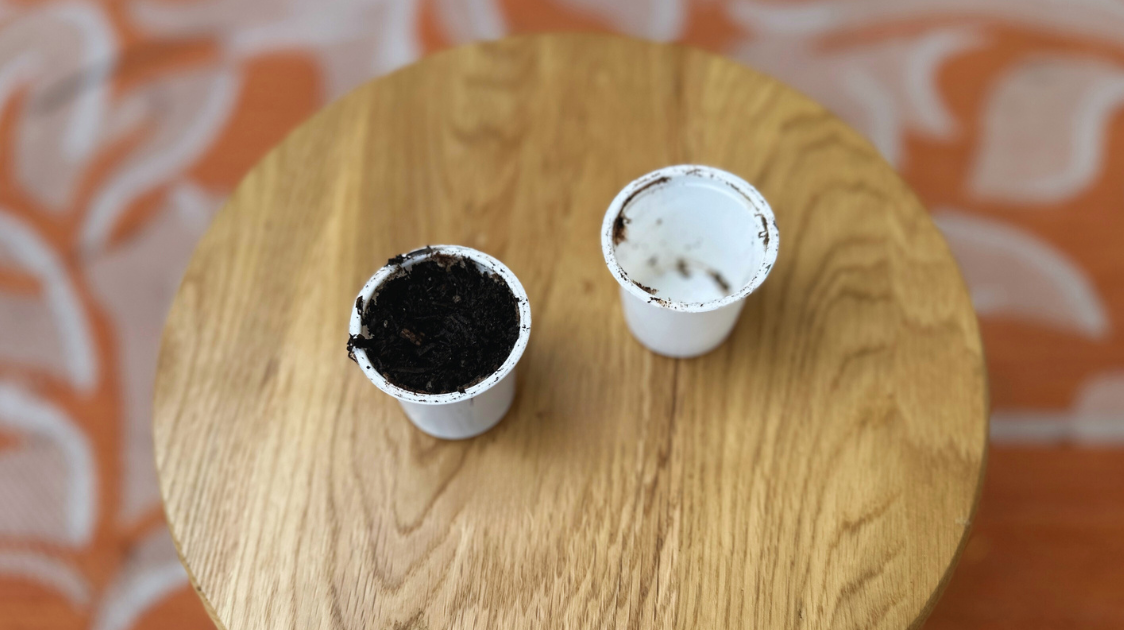
CAN YOU REUSE K-CUPS AND CAN YOU REUSE COFFEE PODS? ...YES!
When you repurpose your coffee pods for your garden, the same cup that delivered your morning coffee becomes the container for vegetables you'll harvest in the summer, while the grounds and paper filters nourish your soil after every brew. This connection between cup and garden is what makes these small sustainable practices so rewarding.
Happy brewing. Happy growing.